Individual results may vary. Rx Only. View important safety information at inspiresleep.com/safety.
CPAP Compliance: Why People Stop Using CPAP and Explore Treatment Alternatives
Many people with sleep apnea struggle to use CPAP consistently. Learn why CPAP compliance matters and explore other treatment options, including Inspire® therapy.
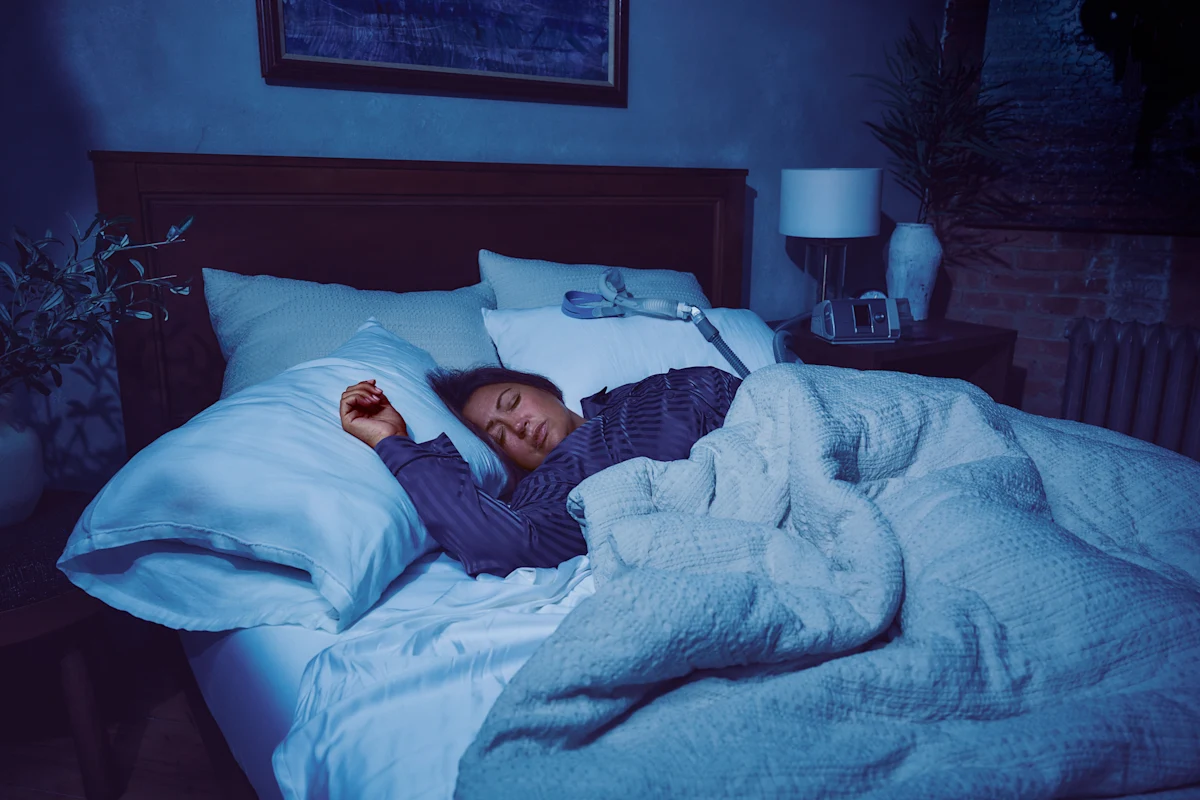
Key Takeaways
Managing sleep apnea is essential for your overall health. When obstructive sleep apnea (OSA) is left untreated or isn't well managed, it can reduce sleep quality and increase your risk of serious health conditions, including heart disease, stroke, type 2 diabetes and depression.
Like any treatment, CPAP works best when used consistently. Missing nights can allow OSA symptoms to return and may reduce the therapy’s benefits.
Many people face challenges that make it difficult to use CPAP long term. Common issues include mask discomfort, nasal congestion, skin irritation, machine noise, cleaning the equipment and traveling with the device.
Many people struggle to meet standard CPAP compliance benchmarks. About half of CPAP users don’t meet the commonly used threshold of 4 hours per night on 70% of nights.1
CPAP is not the only treatment option. If CPAP is difficult to use or isn’t the right fit, other treatments may be appropriate, including oral appliances, weight-loss strategies, implantable devices like Inspire® therapy, or surgery. Your doctor can help determine which option may be right for you.
The best treatment is one you can use comfortably and consistently — Working with your doctor can help determine which treatment is most appropriate for your diagnosis, lifestyle and treatment goals.
Being diagnosed with obstructive sleep apnea (OSA) is the first step. The next step is finding a treatment plan you can stick with over the long term. For people using continuous positive airway pressure (CPAP), that isn't always easy. Many struggle to use CPAP consistently because of mask discomfort, feelings of claustrophobia or trouble adjusting to the air pressure. Some eventually stop using it.2,3
CPAP is the first-line (meaning standard) treatment for moderate to severe OSA, so it’s often prescribed to help keep the airway open during sleep. When used consistently, CPAP can help improve sleep quality and reduce OSA symptoms. But if it isn't used as prescribed—or use is stopped altogether—its benefits can quickly diminish. Over time, untreated sleep or poorly managed sleep apnea is associated with an increased risk of serious health conditions, including heart disease, stroke, type 2 diabetes and depression.4,5 It can also make some existing health conditions more difficult to manage.
That’s why finding a treatment you can use comfortably and consistently matters. Below, we’ll look at what CPAP compliance means, why people stop using CPAP and alternative treatment options when CPAP isn’t the right fit.
What Is CPAP Compliance?
CPAP works best when it’s used regularly. Wearing your device each time you sleep helps keep OSA symptoms under control. Missing nights can allow your symptoms to come back, even if you’ve been doing well.
You may hear the terms CPAP adherence and CPAP compliance used interchangeably. Both simply refer to how consistently you use your CPAP as prescribed. Since most adults are advised to get 7–9 hours of sleep per night, the goal is to wear the CPAP for the full time you’re asleep.
CPAP compliance is often measured using a standard benchmark. Many insurance plans look for at least 4 hours of CPAP use per night on 70% of nights over a 30‑day period. That translates to roughly 4 hours a night, five nights a week. These measurements help show whether patients are meeting common treatment requirements.
Currently, about half of people prescribed CPAP machines use them for less than four hours per night.6
How Providers Track CPAP Compliance
Most modern CPAP machines record usage data, which your healthcare provider can review if needed.
Doctors usually pay close attention to your CPAP use when you first start treatment. Early use often predicts how well someone will stick with CPAP over time.7 Checking in during those first few months can help spot challenges and make sure the equipment is working comfortably for you.8 Later on, your provider may check your data if your symptoms don’t improve or start to return. If you’re using your CPAP regularly and feeling better, they may only review your data during routine follow-up visits.
Some insurance companies also check CPAP compliance after the first 90 days to confirm that patients are meeting usage requirements. If those requirements aren’t met, coverage may change or equipment may need to be returned. It’s a good idea to check your plan’s specific rules.
Why People Stop Using CPAP
Understanding why people stop using CPAP and how to address these challenges may help make treatment easier to continue. Many people struggle with comfort issues—such as an ill-fitting mask, nasal congestion or skin irritation. Others may find the cleaning routine overwhelming, feel self-conscious wearing the device or find traveling with CPAP difficult. The machine’s noise can also bother users or their bed partners.
Managing CPAP side effects often involves adjusting the mask, changing pressure settings or working with your doctor to improve comfort.
Even with the right fit and consistent use, CPAP doesn’t relieve symptoms for everyone. Airway anatomy, other medical conditions, and personal preferences can all play a role.
If you’re having trouble using CPAP as prescribed, talk with your doctor. They can help adjust your equipment, sleep routine or treatment plan to improve comfort and make CPAP easier to use long term.
And if CPAP continues to be difficult to use or uncomfortable for you, it’s best to work with your doctor to explore CPAP alternatives.
When CPAP Isn’t the Right Fit: Other Treatment Options
Your doctor may recommend different alternatives depending on your age, sleep apnea severity, symptoms, medical history, lifestyle and insurance coverage. Options may include:
Oral appliances that reposition your jaw to improve airflow
Weight-loss medications that may help reduce airway narrowing
Implantable devices to help keep your airway open
Surgery to adjust structures in your nose, mouth, throat or jaw
Your doctor will consider your diagnosis, preferences and treatment goals when deciding which option may be right for you.
Inspire® therapy is the only implantable sleep apnea treatment that’s been chosen by providers and patients for over a decade.9
Instead of pushing air through a mask and hose, Inspire therapy works comfortably10 inside your body to help prevent airway blockage during sleep. The implant delivers gentle pulses to the hypoglossal nerve, which controls your tongue movement. This helps gently move your tongue forward to keep your airway open, so you can breathe regularly and sleep better.11
People with Inspire therapy use it consistently—on average, patients use it for over 5 hours each night.12,13,14
Inspire therapy patients also report high satisfaction—91% say it’s better than CPAP and 93% recommend it to a friend or family member.15
Both CPAP and Inspire therapy are FDA-approved and proven to be safe and effective for treating OSA. Many people benefit from either option, and both have strong insurance coverage through commercial plans, Medicare, and Veterans Affairs (VA).
If you’re struggling with CPAP, talk with your doctor about CPAP alternatives. The right treatment is one that fits your health needs, lifestyle, and sleep goals—and one you can use comfortably and consistently.
Frequently Asked Questions
What counts as CPAP compliance?
CPAP compliance means using your device as prescribed by your healthcare provider. A common benchmark used by many insurance plans is wearing CPAP for at least 4 hours per night on 70% of nights during a 30-day period. Your provider may review your usage data to see how often you use your device and help address any challenges.Why do so many people stop using CPAP?
Many people face challenges that make it hard to continue using CPAP long term. Common issues include an uncomfortable mask, nasal congestion, skin irritation, cleaning the equipment, difficulty traveling with the device, feeling self-conscious about wearing the device and machine noise disturbing bed partners.What happens if I don’t use my CPAP consistently?
Using CPAP less often than prescribed may reduce the benefits of treatment. When CPAP is not used consistently, sleep apnea symptoms can return, which may affect your sleep quality and overall health. Untreated or poorly managed OSA is linked to a higher risk of serious health concerns, including stroke, heart disease, type 2 diabetes and depression.How can I make CPAP more comfortable?
If CPAP feels uncomfortable, talk with your doctor. Adjusting your mask fit, changing pressure settings, addressing nasal congestion and finding the right equipment setup may help make CPAP easier to use consistently.What are the alternatives if I can’t tolerate CPAP?
If CPAP is difficult to use or isn’t the right fit for you, other treatment options may be available. Depending on your needs, options may include oral appliances, weight-loss approaches, implantable devices like Inspire therapy, or surgery. Your doctor can help determine which treatment option may be right for you.
Sources
1 SleepApnea.org, CPAP Compliance: What It Is and Why It's Important. April 10, 2026.
2 Rotenberg et al. Trends in CPAP adherence over twenty years of data collection: a flattened curve. Journal of Otolaryngology Head and Neck Surgery 2016; 45:43
3 Weaver, TE, Sawyer, AM. "Adherence to Continuous Positive Airway Pressure Treatment for Obstructive Sleep Apnea: Implications for Future Inventions." Indian Journal of Medical Research, 2010; 131: 245-258.
4 Peppard, P.E., Young, T., Barnet, J.H., Palta, M., Hagen, E. W., Hla, K. M., (2013). Increased Prevalence of Sleep-Disordered Breathing in Adults, American Journal of Epidemiology, 1014
5 Young T, Finn L, Peppard PE, Szklo-Coxe M, Austin D, Nieto FJ, Stubbs R, Hla KM. Sleep disordered breathing and mortality: eighteen-year follow-up of the Wisconsin sleep cohort. 31(8), 1071-1078.
6 SleepApnea.org, CPAP Compliance: What It Is and Why It's Important. April 10, 2026.
7 PubMed, Early CPAP use identifies subsequent adherence to CPAP therapy. March 30, 2007.
8 PubMed, Telemonitoring in continuous positive airway pressure-treated patients improves delay to first intervention and early compliance: a randomized trial. November 2017.
9 Strollo PJ Jr, Soose RJ, Maurer JT, et al. | Magaña LC, Strollo PJ, Steffen A, et al.
10 Suurna MV, Steffen A, Boon M, et al. Impact of Body Mass Index and Discomfort on Upper Airway Stimulation: ADHERE Registry 2020 Update. Laryngoscope 2021; 131(11): 2616-2624.
11 Woodson BT, Strohl KP, Soose RJ, et al. Upper Airway Stimulation for Obstructive Sleep Apnea: 5-Year Outcomes. Otolaryngology Head Neck Surgery 2018; 159(1):194-202).
12 Lundeen M, Aloia M, Somepalli S, Jain V. | Coca KK, Heiser C, Huntley C, et al.
13 Lundeen M, Aloia M, Somepalli S, Jain V, 0756 Long-Term Adherence of Hypoglossal Nerve Stimulation for OSA, Sleep, Volume 48, Issue Supplement_1, May 2025, Page A328, https://doi.org/10.1093/sleep/zsaf090.0756
14 Coca KK, Heiser C, Huntley C, et al. Hypoglossal Nerve Stimulation Usage by Therapy Nonresponders. Otolaryngol Head Neck Surg. 2022;166(4):786-790. doi:10.1177/01945998211036867
15 Data on file.
ScienceDirect, Health Sciences Review, How many hours per night is enough? A systematic integrative review to identify optimal hours of CPAP therapy use for sleep apnoea. December 2022.
SleepApnea.org, CPAP Compliance: What It Is and Why It's Important. April 10, 2026.
Sleep Foundation, CPAP Compliance: What It Is and Why It’s Important. December 18, 2025.
Sleep Foundation, CPAP Machine Side Effects: Dry Mouth, Aerophagia, and More. December 29, 2025.
Related Articles
 Sleep Education
UARS vs. Sleep Apnea: Symptoms, Diagnosis and Treatment
Learn the key differences between upper airway resistance syndrome (UARS) and sleep apnea, including symptoms and treatment options for better sleep.
Read More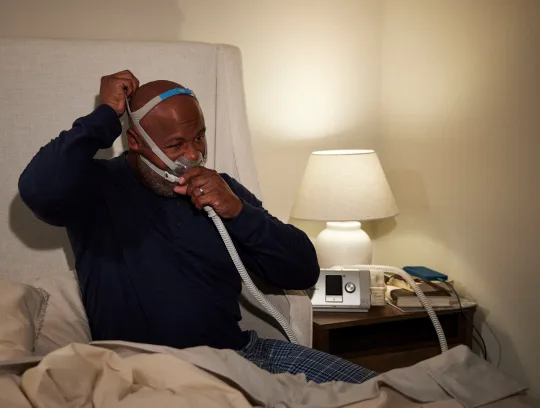 Sleep Education
Struggling with CPAP? Explore other apnea treatment options
Struggling with CPAP side effects? Learn about obstructive sleep apnea (OSA) and explore effective treatment options—including Inspire® therapy.
Read More Sleep Education
Your guide to what happens during a sleep study
Learn what happens during a sleep study, including what to do if you can't sleep or wake up during the test.
Read MoreInterested in learning more?
We’re here to help. Fill out the form below to receive more information about Inspire therapy, including how to qualify and what to expect.