Individual results may vary. Rx Only. View important safety information at inspiresleep.com/safety.
Struggling with CPAP? Explore other apnea treatment options
Struggling with CPAP side effects? Learn about obstructive sleep apnea (OSA) and explore effective treatment options—including Inspire® therapy.
Key Takeaways
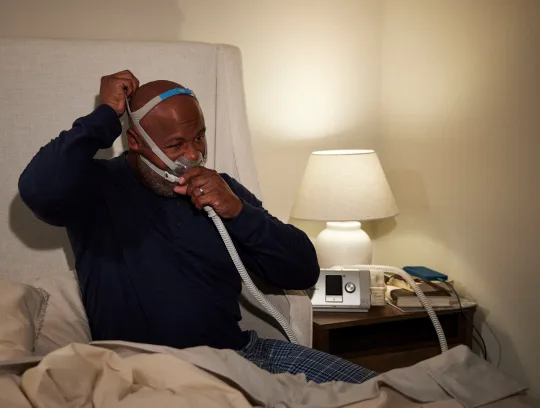
CPAP is the first-line treatment, but not the only option. Most people with moderate to severe sleep apnea start with CPAP treatment, as it’s considered the gold standard, well-established and effective for many patients. But it’s not the only option—and many people who can’t tolerate CPAP move on to find another treatment that better fits their needs. Other treatments include Inspire® therapy and oral appliances.
Many people choose Inspire® therapy when CPAP doesn’t work for them. It’s a mask-free,1 implantable device that works comfortably2 inside your body to help keep your airway open during rest, so you can breathe regularly and sleep soundly.
Other treatment options may include lifestyle changes, dental devices, weight management or surgery.
Uncomfortable or frustrated? Still not sleeping through the night? If CPAP side effects are holding you back—or if you’ve stopped using it altogether—it’s not uncommon for CPAP to feel like a difficult fit for some people. What matters most is finding a treatment approach that you can stick with, since treating sleep apnea is important for your long-term health. There are several effective options available. Keep reading to explore sleep apnea treatments and consider which ones may be right for you.
First line of defense for sleep apnea treatments
Obstructive sleep apnea (OSA) is the most common type of sleep apnea. It occurs when your airway becomes blocked during sleep, leading to brief pauses in breathing that disrupt rest and reduce oxygen levels. In moderate to severe cases, these interruptions and awakenings can happen repeatedly throughout the night. Left untreated, OSA can contribute to serious health conditions.
(Read “What is OSA?” for a deeper dive.)
CPAP (continuous positive airway pressure) is typically the first-line treatment for moderate to severe OSA. It’s widely considered the “gold standard” because it’s been used for many decades, works well for many people and doesn’t involve surgery. The system is designed to deliver pressurized air through a hose and mask into your airway. This helps keep your airway open and prevent sleep apnea events from occurring. (Read Why quality sleep matters for more details.)
Although CPAP works well for many people, it doesn’t work for many people – about half of patients struggle with or stop using it.3,4
Common reasons people struggle with CPAP
Every person’s experience is different, and this can happen for a variety of reasons. Some people may feel self-conscious about using the system or find it inconvenient to travel with. Others may struggle with the required regular maintenance. Concerns from a bed partner can also play a role in how comfortable someone feels using it consistently.
In addition, some people experience physical side effects, like congestion, runny nose, discomfort exhaling, dry mouth, dry throat, dry eyes, nosebleeds, pressure marks, skin irritation, bloating (including stomach aches, flatulence and belching) or feeling claustrophobic.
When people experience these kinds of issues, it’s often recommended to try making adjustments to make using CPAP easier, more comfortable or more effective. Depending on the issue, this may involve trying different mask styles, fine-tuning pressure settings, changing sleep position, keeping equipment cleaner, using a humidifier, stopping smoking, or working toward and maintaining a healthier weight.
If these solutions aren’t enough, it’s important to talk with your sleep specialist about alternative options.
CPAP alternatives: Next-line sleep apnea treatments
One of the most chosen next-line treatment options for moderate to severe obstructive sleep apnea is Inspire® therapy. It’s a mask-free solution5 that works comfortably6 inside your body to treat the root cause of your OSA.
Inspire therapy
A small device, placed under your skin near your collarbone during a safe, short outpatient procedure, delivers gentle pulses to your airway muscles while you sleep. These pulses help keep your airway open, so you can breathe regularly and sleep soundly. You control your therapy with a small remote – simply turn it on when you’re ready to rest and turn it off when you’re ready to rise.
Many patients – 91% – who’ve tried both say Inspire® therapy is better than CPAP.7 Common reasons why include Inspire therapy:
Reduces sleep apnea events each night by 79% without a mask, hose or external machine.
Fits everyday life – no ongoing cleaning or maintenance.
Doesn’t disturb others – 90% of bed partners report no snoring or soft snoring
Is easy to use and travel with – only requires the small remote.
With nearly 15 years of clinical trial and real-world experience, Inspire therapy has a proven safety record. In the largest real-world study of Inspire® therapy, 99.6% of implant procedures were completed successfully with no major complications, significantly outperforming traditional sleep apnea surgeries.9
As with any surgically implanted device, however, there are risks, including:
Pain, swelling, temporary tongue weakness and infection. These effects are generally expected with any surgery, and most resolve on their own or with medication within weeks or months.
After therapy is turned on, some patients may experience discomfort from stimulation, tongue abrasion, dry mouth or awareness of the device. Most of these effects improve on their own, with medication or through adjustments to therapy settings.
It’s important to talk with your doctor to decide whether it’s right for you.
Exploring other alternatives to CPAP
Depending on your sleep apnea symptoms and severity, as well as your age and medical history, other treatment options may include:
Lifestyle changes
Lifestyle changes – like adjusting sleep position, losing weight, avoiding smoking, alcohol and substances, increasing physical activity, and doing myofunctional exercises for the tongue, mouth, and throat – can help reduce symptoms and improve airway function.
These strategies may help, especially in mild cases, but are often combined with other treatments. Some changes, such as quitting smoking, may involve temporary challenges like nicotine withdrawal, while starting new exercises may cause mild discomfort as the body adjusts.
These changes may not fully resolve obstructive sleep apnea, but they can help reduce its severity – especially in mild to moderate cases.
Weight management
Excess weight can lead to fat deposits around the neck that narrow or block the airway, making breathing during sleep harder. GLP-1 medications can help some people reach and maintain a healthier weight, typically when combined with diet and exercise, under a doctor’s supervision. Weight-loss surgery may also be recommended in certain cases.
Common side effects of GLP-1 medications include nausea, vomiting, diarrhea or constipation. Rapid weight loss can also lead to noticeable changes in appearance, such as a gaunt look. Surgery carries additional risks your doctor will discuss with you.
Losing excess weight can improve sleep apnea symptoms, but many people with moderate to severe OSA still need additional treatments.
Dental appliances
Mouthpieces – such as mandibular advancement devices (MADs) and tongue-stabilizing devices (TSDs) – can help manage mild to moderate sleep apnea. These may be over-the-counter appliances or custom-made, and are typically worn during sleep to help improve breathing and reduce sleep apnea events.
Side effects may include discomfort, salivation changes, mouth soreness, dry mouth or gum irritation. Over time, using these devices may also change the position of your teeth, jaw muscles or bite.
Surgery
If structural issues with your nose, mouth, throat or jaw block airflow, your doctor may recommend surgery. The type of procedure depends on your needs and often involves repairing airway structures or removing tissue. Surgery is usually considered only if other treatments haven’t worked, as it often carries higher risks, requires hospitalization and involves longer recovery.
Talk to your doctor
If your current sleep apnea treatment isn’t working, consult your doctor. They can adjust your plan or suggest alternatives based on your symptoms, health, age and lifestyle. Many people find a treatment that fits their life, helping them manage sleep apnea and improve quality of life.
Frequently asked questions
What are the most common side effects of CPAP?
CPAP is effective for many people, but it can cause side effects, including congestion, runny nose, dry mouth, dry throat, dry eyes, nosebleeds, pressure marks, skin irritation, bloating and feelings of claustrophobia. Adjusting your mask, pressure settings, sleep position, or using a humidifier can often reduce these effects.Can CPAP cause long-term health problems?
For most people, CPAP is safe and doesn’t cause long-term health concerns. Side effects are usually temporary and manageable with adjustments to the mask, equipment or routine. If you continue to struggle with discomfort or can’t use CPAP effectively, it’s important to discuss alternative treatments with your doctor.Why do so many people stop using CPAP?
Many people struggle with CPAP or stop using it. Reasons include side effects (such as discomfort, sore throat, dry mouth or feeling claustrophobic,) as well as lifestyle challenges (like feeling self-conscious or difficulty keeping up with the regular cleaning.)What can I use instead of a CPAP machine?
Depending on your sleep apnea severity, symptoms and medical history, other options may include lifestyle changes, dental devices, Inspire® therapy, weight management or surgery.Is Inspire therapy a good alternative to CPAP?
Yes, Inspire therapy is a proven safe and effective next-line treatment for people with moderate to severe obstructive sleep apnea who struggle with or stop using CPAP. Most patients (91%) who’ve tried both treatments prefer Inspire therapy. 10
Sources
1 ADHERE Registry: Data on File
2 Suurna MV, Steffen A, Boon M, et al. Impact of Body Mass Index and Discomfort on Upper Airway Stimulation: ADHERE Registry 2020 Update. Laryngoscope 2021; 131(11): 2616-2624.
3 Rotenberg et al. Trends in CPAP adherence over twenty years of data collection: a flattened curve. Journal of Otolaryngology Head and Neck Surgery 2016; 45:43
4 Weaver, TE, Sawyer, AM. "Adherence to Continuous Positive Airway Pressure Treatment for Obstructive Sleep Apnea: Implications for Future Inventions." Indian Journal of Medical Research, 2010; 131: 245-258.
5 ADHERE Registry: Data on File.
6 Suurna MV, Steffen A, Boon M, et al. Impact of Body Mass Index and Discomfort on Upper Airway Stimulation: ADHERE Registry 2020 Update. Laryngoscope 2021; 131(11): 2616-2624
7 Data on file.
8 2 Woodson BT, Strohl KP, Soose RJ, et al. Upper Airway Stimulation for Obstructive Sleep Apnea: 5-Year Outcomes. Otolaryngology Head Neck Surgery 2018; 159(1):194-202
9 Suurna MV, Steffen A, Boon M, et al. Impact of Body Mass Index and Discomfort on Upper Airway Stimulation: ADHERE Registry 2020 Update. Laryngoscope 2021; 131(11): 2616-2624
10 Data on file.
Cleveland Clinic, CPAP Machine: What It Is, How It Works & Side Effects. July 11, 2024.
Cleveland Clinic, Oral Appliances for Sleep Apnea: Benefits & How They Work. April 19, 2024.
Harvard Health, GLP-1 diabetes and weight-loss drug side effects: "Ozempic face" and more. February 5, 2024.
My Health, Sleep Apnea: Should I Have Surgery? July 31, 2024.
Penn Medicine, Sleep Apnea Surgery — Options & What to Expect. Accessed February 10, 2026.
ScienceDirect, Glucagon-like Receptor-1 agonists for obesity: Weight loss outcomes, tolerability, side effects, and risks. August 31, 2024.
SleepApnea.org, CPAP Machine Side Effects and How to Prevent Them. November 24, 2025.
Sleep Foundation, CPAP Machine Side Effects: Dry Mouth, Aerophagia, and More. December 29, 2025.
Related Articles
 Sleep Education
UARS vs. Sleep Apnea: Symptoms, Diagnosis and Treatment
Learn the key differences between upper airway resistance syndrome (UARS) and sleep apnea, including symptoms and treatment options for better sleep.
Read More Sleep Education
CPAP Compliance: Why People Stop Using CPAP and Explore Treatment Alternatives
Many people with sleep apnea struggle to use CPAP consistently. Learn why CPAP compliance matters and explore other treatment options, including Inspire® therapy.
Read More Sleep Education
Your guide to what happens during a sleep study
Learn what happens during a sleep study, including what to do if you can't sleep or wake up during the test.
Read MoreInterested in learning more?
We’re here to help. Fill out the form below to receive more information about Inspire therapy, including how to qualify and what to expect.