Individual results may vary. Rx Only. View important safety information at inspiresleep.com/safety.
Why is my husband still snoring with CPAP?
Still snoring with CPAP? Learn why CPAP doesn’t always stop snoring and explore other proven sleep apnea treatment options.
Key Takeaways
CPAP may not stop snoring. Even with CPAP, your husband, or anyone with sleep apnea, may still snore because the therapy treats an underlying condition, such as obstructive sleep apnea, not snoring itself.
Equipment matters. Mask fit, air pressure, equipment maintenance and mouth breathing can all affect how well CPAP works and whether (and how much) your husband snores.
Lifestyle and health factors. Sleep position, weight, alcohol use and congestion can contribute to snoring.
Other treatment options are available. If CPAP isn’t effective or tolerable for your husband, alternative therapies are available. Consulting a doctor or sleep specialist can help identify the cause of his snoring and guide next steps.
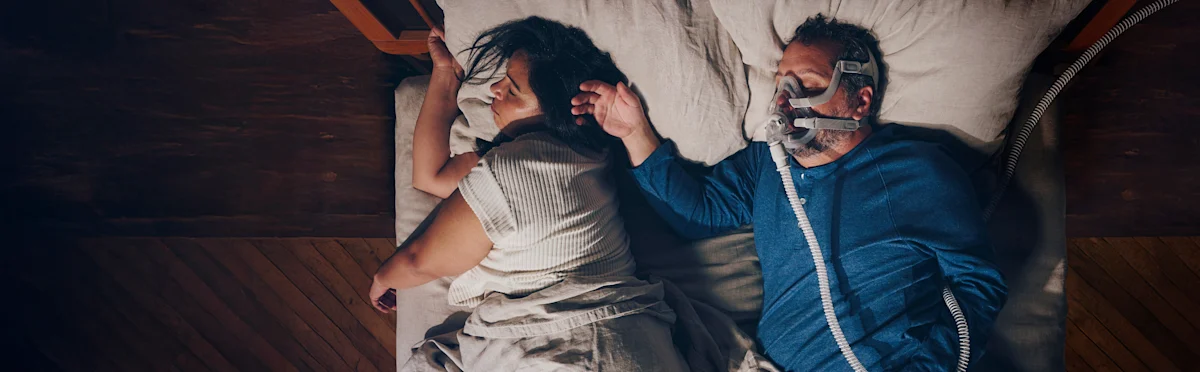
After years of gently nudging your husband to roll over and stop snoring, he finally got a CPAP machine. You dreamed of restful nights sleeping soundly side-by-side. But here you are months later wondering “Why is my husband still snoring with CPAP?”
That’s a common question. Every person’s situation is different, so it’s best to talk to his doctor. Still, here are some common reasons people may continue to snore with CPAP and tips for how to deal with a snoring partner.
Why do people still snore with CPAP?
Snoring happens when air moves past the soft tissues in the back of your throat, causing them to vibrate and create the rattling sound. Snoring itself isn’t considered a medical condition. But it’s a common sign of obstructive sleep apnea (OSA), the most common type of sleep apnea. This is a serious condition, and doctors often treat it first with CPAP therapy.
OSA occurs when the muscles and tissues in the upper airway relax during sleep, partially or completely blocking airflow. These repeated breathing interruptions briefly wake the brain up, preventing deep, restorative sleep and lowering oxygen levels.
CPAP addresses the underlying problem by delivering a steady stream of air through a hose and mask or nasal piece, keeping the airway open during sleep. When it works properly, CPAP usually reduces—and sometimes eliminates—snoring.
However, snoring doesn’t always go away completely with CPAP. Because the machine is designed to prevent breathing interruptions—not to silence snoring itself—some people may still snore even when using CPAP or another sleep apnea treatment correctly.
Troubleshooting snoring with CPAP
If your husband is still snoring with CPAP, several factors could be contributing factors, such as:
Mask or nasal piece fit: If it’s too loose or has worn out over time, it won’t seal properly, reducing airflow and treatment effectiveness.
Air pressure settings: If they’re too low, the airway may still collapse. If they’re too high, it can cause discomfort, air leaks or sleep disruptions.
Equipment maintenance issues: Dirty or worn filters, tubing or mask components or loose connections between parts can reduce airflow.
Mouth breathing: Air can escape, reducing the effectiveness of the therapy and increasing the chance of airway collapse.
Congestion: Colds or allergies can interfere with airflow.
Alcohol or sedatives: These relax airway muscles, making OSA symptoms worse.
Lifestyle factors: Adjusting his sleep position, maintaining a healthy weight and improving sleep hygiene may help reduce snoring and improve sleep quality.
Routine equipment care can usually be managed at home. For other factors and personalized guidance, consult with your doctor or sleep specialist.
Alternatives to CPAP that may help ease snoring
At the same time, your husband may have already tried the approaches above and may still be experiencing snoring. In this context, and given that CPAP can feel like a challenging option for a variety of reasons, you both may be wondering whether it is the right treatment approach for him.
As mentioned above, CPAP is the first-line therapy for treating moderate to severe OSA, so most providers recommend it first. If it doesn’t work well for your husband, they may have him try different machines, mask types and sizes before considering other options.
For those who struggle with CPAP – or stop using it – there are alternative treatments for OSA. One option is Inspire® therapy, which 91% of patients say works better than CPAP.1 It’s also been shown that bed partners report less snoring – 90% of bed partners report no snoring or soft snoring.2 (Read more about real Inspire patient experiences here.)
If you’re looking for ways to help your husband stop snoring, Inspire therapy may be worth discussing with his doctor as a potential option for better sleep for both of you.
Other reasons for snoring
There may be other reasons your husband is snoring, too. While frequent, loud snoring is often linked to obstructive sleep apnea, it isn’t always the cause. Other risk factors include:
Back sleeping: Gravity causes the tissues in the throat to fall backward, narrowing the airway and increasing the vibration.
Anatomy: Features like large tonsils, a large tongue, small or set-back jaw, soft palate, deviated septum, or nasal polyps can restrict airflow.
Illnesses or congestion: Allergies, sinus infection and colds can block nasal passages and disrupt airflow.
Excess weight: Extra fat around the neck can narrow the airway and make snoring more likely.
Your doctor can help determine if one or some of these factors are contributing to your husband’s snoring, and design a treatment plan that’s right for him.
Snoring treatment options
Snoring treatment options usually involve making it easier to breathe by opening the airway and may include:
Lifestyle changes: Maintaining a healthy weight, avoiding alcohol before bed, quitting smoking and improving sleep habits can help open the airway and reduce snoring.
Over-the-counter remedies: Nasal strips or decongestants can clear nasal passages and make breathing easier.
Oral appliances: Mandibular advancement devices (MADs) and tongue-stabilizing devices (TSDs) can help keep the airway open while sleeping.
Surgery: Procedures on the nose, mouth, throat or jaw can remove or reshape tissues and widen the airway to help reduce snoring.
Weight-loss medications: GLP-1 drugs can help people achieve and maintain a healthier weight, which may reduce snoring.
Consulting a doctor can help identify why your husband is still snoring with CPAP and explore ways to help snoring improve. Talk with a doctor or sleep specialist to determine the best next steps.
Frequently asked questions
Is a CPAP machine supposed to stop snoring?
CPAP treats obstructive sleep apnea by keeping the airway open during sleep. While treating sleep apnea usually reduces snoring, it’s designed to prevent breathing interruptions, not the sound of snoring itself. Some people may continue to snore even when using CPAP correctly.Is CPAP noisy for partners?
Some CPAP machines and masks make noticeable airflow or leak sounds that can bother bed partners.How can I stop my husband from snoring while using CPAP?
Make sure the CPAP is working right – check the mask fit, pressure settings and equipment. Pay attention to things like mouth breathing, congestion, sleep position and lifestyle habits, all of which can be risk factors for snoring. If he’s still snoring, a doctor can help figure out other options or adjustments.Is it normal for my husband to snore with a CPAP machine?
Snoring can continue even when CPAP is used correctly because CPAP treats airway blockages, not snoring itself. Some people keep snoring due to factors like mask fit, pressure settings, mouth breathing, lifestyle habits or other medical conditions.
Sources
1 Data on file.
2 Woodson BT, Strohl KP, Soose RJ, et al. Upper Airway Stimulation for Obstructive Sleep Apnea: 5-Year Outcomes. Otolaryngology Head Neck Surgery 2018; 159(1):194-202)
American Medical Association, What doctors wish patients knew about snoring | American Medical Association. April 12, 2024.
Cleveland Clinic, Snoring: Causes, Remedies & Prevention. May 11, 2023.
Mayo Clinic, CPAP machines: Tips for avoiding 10 common problems. January 21, 2026.
SleepApnea.org, Are CPAP Machines Loud? December 18, 2025.
SleepApnea.org, How Weight Affects Sleep Apnea. January 5, 2026.
SleepApnea.org, Still Snoring With a CPAP Machine? Causes and Solutions. January 28, 2026.
Sleep Foundation, If I Snore, Do I Need CPAP? January 7, 2026.
Sleep Foundation, Still Snoring With a CPAP Machine? January 28, 2026.
Yale Medicine, 7 Things To Know About Sleep Apnea and CPAP. April 18, 2022.
Related Articles
 Snoring
Best anti-snoring devices: Can they fix sleep apnea?
Learn about the best anti-snoring devices – and when snoring might be a sign of sleep apnea.
Read More Snoring
Is snoring sending you to separate beds?
Screening for sleep apnea may be the solution that reunites you
Read More
Is snoring keeping you or someone you love up at night?
Learn why people snore, signs of a health risk and solutions.
Read MoreInterested in learning more?
We’re here to help. Fill out the form below to receive more information about Inspire therapy, including how to qualify and what to expect.