Individual results may vary. Rx Only. View important safety information at inspiresleep.com/safety.
Is Sleep Apnea Linked to Dementia and Alzheimer’s?
Extensive research shows a strong link between untreated obstructive sleep apnea (OSA) and an increased risk of cognitive decline, all-cause dementia, and Alzheimer’s disease.

Key Takeaways
OSA increases Alzheimer's risk by 45% and dementia risk by 33%
68% of people with sleep disorders have higher cognitive impairment risk
54 million US adults have OSA (only 20% diagnosed)
OSA is treatable. Successful treatment may prevent cognitive decline
Inspire therapy works for CPAP-intolerant patients
Real patients (Larry F, Karen W) showed memory improvement after treatment
Dementia causes a decline in memory, thinking skills and the ability to manage daily activities. This can reduce a person’s independence.
A 2019 study estimated that about 54 million in the United States have OSA.1 Only 20% are diagnosed.2
Those numbers project to rise 35% (76.6 million) by 2050 with a sharper increase for women.3
Over 55 million people worldwide are currently living with dementia, according to the World Health Organization. There are about 10 million new cases annually.4
About 8.5 million people suffer from vascular dementia, caused by decreased blood flow to areas of your brain.5
There are also about 9.1 million cases of mixed dementia, combining vascular and degenerative types.5
Alzheimer’s disease is the most common cause of degenerative dementia. It affects about 9.8 million people globally.6
If you suspect that you or a loved one may have OSA, it is important to talk to your provider to see if you need a sleep study.
If you are already diagnosed with OSA and do not benefit from a Continuous Positive Airway Pressure (CPAP) machine, you can take this short quiz to see if you may qualify for Inspire® therapy.
What’s the importance of treating OSA?
Research shows a strong connection between sleep disorders, including OSA, and dementia risk.
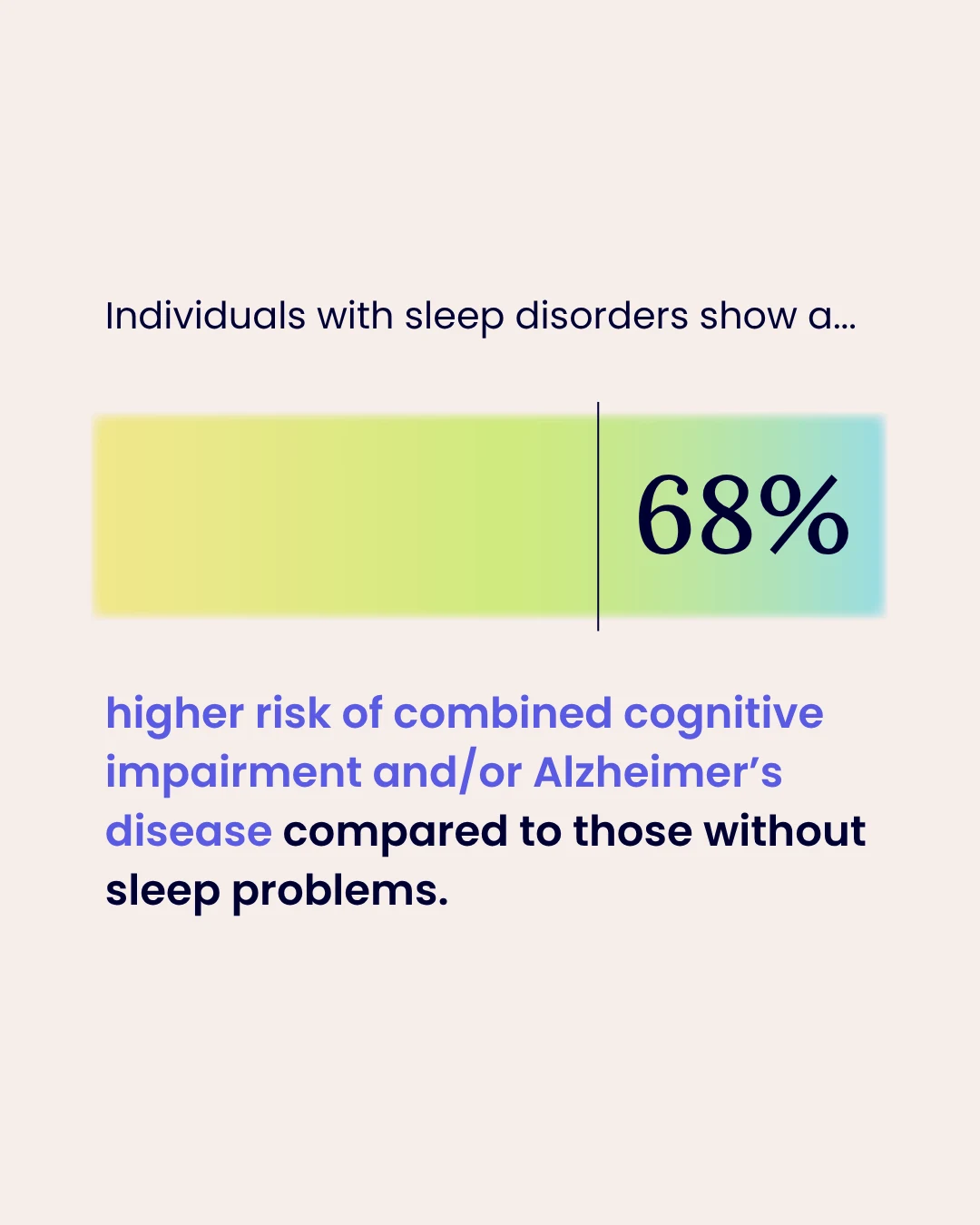
(Bubu OM et al. Sleep, Cognitive Impairment, and Alzheimer’s Disease: A Systematic Review and Meta‑Analysis. Sleep. 2017 & Simmonds E et al. Sleep disturbances as risk factors for neurodegeneration later in life. npj Dementia. 2025)
68% of individuals with sleep disorders have a higher risk of combined cognitive impairment and/or Alzheimer’s disease compared to those without sleep problems.
A 2025 meta-analysis of eight cohort studies found that people with OSA had a 33% higher risk of developing dementia.7 Seven studies found a significant link between OSA and Alzheimer’s disease, with a 45% higher risk, as well.7
Another meta-analysis linked excessive daytime sleepiness (EDS) to higher risks of vascular dementia, all-cause dementia and cognitive decline. EDS is a common symptom of OSA.4
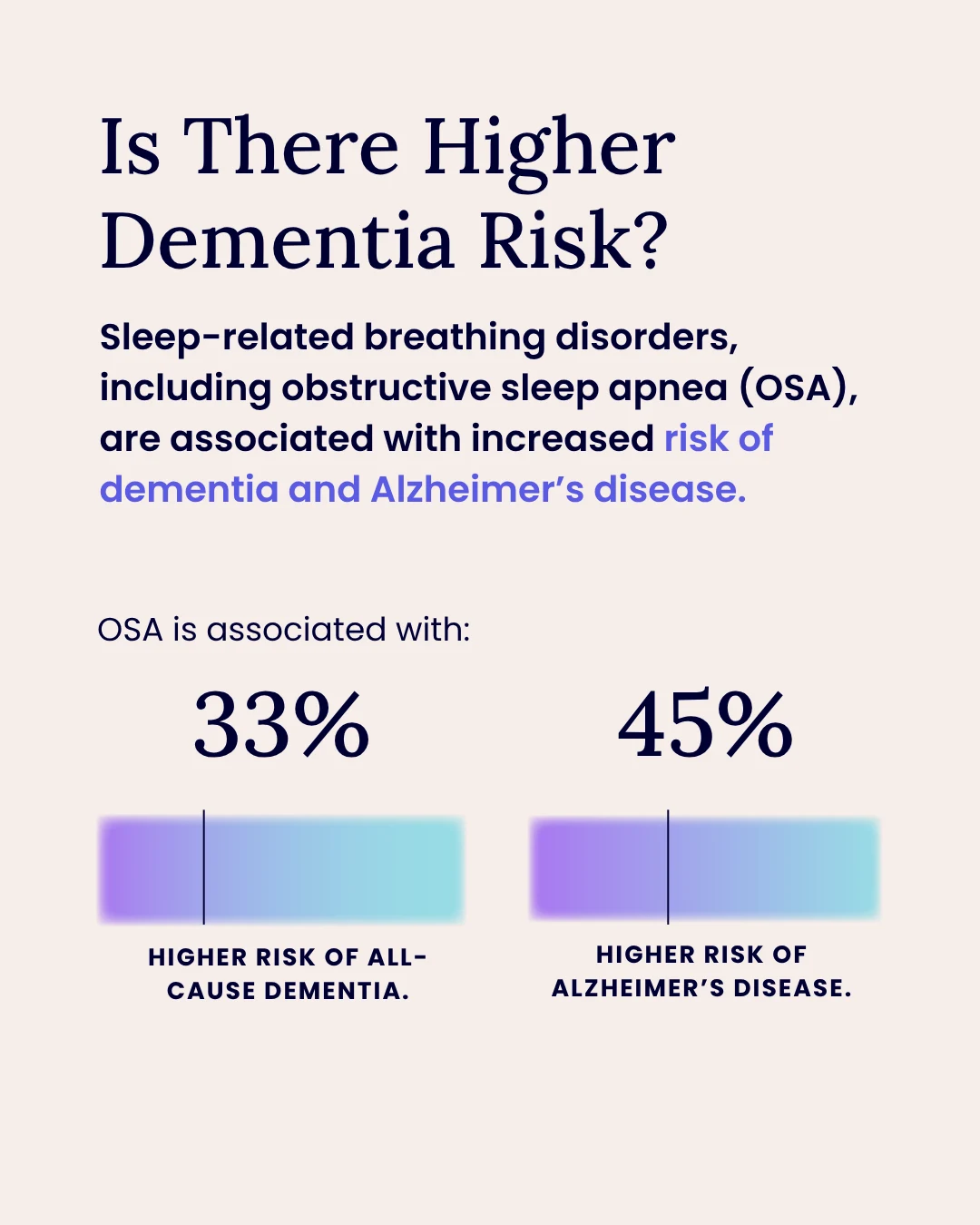
(Ungvari Z et al. Sleep disorders increase the risk of dementia, Alzheimer’s disease, and cognitive decline: a meta‑analysis. GeroScience. 2025)
Poor sleep quality is also associated with an increased risk for Alzheimer’s and other forms of dementia.4
These findings suggest that sleep disorders are not just a result of brain degeneration. They may also play a role in triggering dementia and speeding its progression.
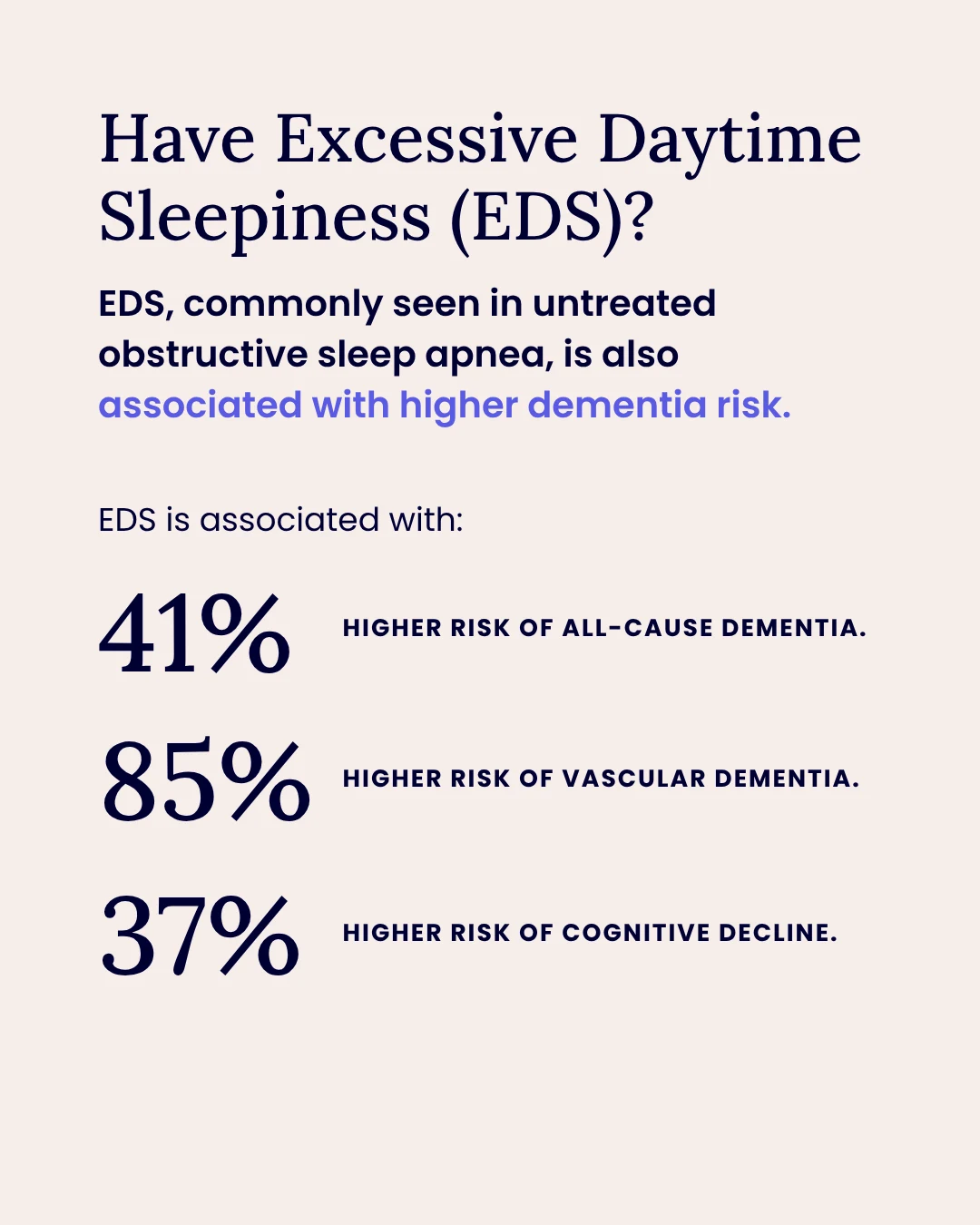
(Khaing K et al. Effect of Excessive Daytime Sleepiness and Long Sleep Duration on All‑Cause Dementia. Journals of Gerontology: Series A. 2025 | Zhang J et al. Sleep disorders and the risk of cognitive decline or dementia. Journal of Neurology. 2025)
Does Treating Sleep Apnea Help Cognitive Health?
Meet Larry F has mild dementia. He also struggled with night terrors for several years.
Those days and nights were tough on his wife Cathie. She just didn’t know how to help.
Larry slept 18 hours a day and only woke up to eat. He also injured himself while fighting in his sleep sometimes.
He later received an obstructive sleep apnea diagnosis after an overnight stay in a hospital. His oxygen levels fell to the mid-to-low 70s which concerned his doctors.
He could not benefit from his CPAP machine, however.
The night terrors continued as a result. And his poor memory stayed the same.
Cathie later learned about Inspire® therapy from Larry’s doctor. Larry qualified and received the Inspire® implant in June 2024.
Cathie said it is “transformational.” Larry still has dementia symptoms, but he is sleeping normal again.
He remembers friends at church and recalls time spent with his family.
He also does things he has not done in years. This includes fishing, going to his grandchildren’s sporting events and even alligator hunting.

Larry F can do more for himself since successfully treating his obstructive sleep apnea.
Best of all, he does not have night terrors anymore. This helps Cathie sleep better knowing he will not harm himself.
“I have been really surprised at the little things he can remember that he wouldn't have remembered prior to this,” Cathie said. “I know that getting a good night's sleep has been instrumental in the clarity that we're seeing.”
Karen W also struggled with brain fog and memory issues due to her untreated OSA.

Karen W's memory and brain fog improved over time after successfully treating her obstructive sleep apnea.
It became so bad that her provider said she could develop dementia in less than five years without improved sleep.
She tried to use CPAP and Bilevel Positive Airway Pressure (BiPAP) machines. She could not tolerate either.
Karen still went to bed tired and felt worse in the morning. She also struggled to function at home and at work.
She even took medication just to stay awake during the day.
Depression worsened with the possibility of dementia. But it also motivated her to find a solution.
She certainly did not want to miss her daughter’s major life events.
This is when Karen learned about Inspire therapy.
She later qualified and received the Inspire implant in August 2018. And she noticed her sleep improved just a few weeks after starting the therapy.
Today, Karen does not need medication to stay awake. And she is no longer in cognitive decline.
She even attended her daughter’s wedding and gave a speech over five years after her provider warned her about dementia.
“I’m learning new things, and the big win is instead of continuing to decline, I’ve gone the other way,” she said.
Frequently Asked Questions
Does treating sleep apnea prevent Alzheimer's disease?
Treating sleep apnea may reduce risk, may improve cognitive health, and may improve memory in early decline.
Can sleep apnea cause dementia?
OSA is a significant risk factor (33% increase), but not the only cause. Treatment may help slow progression.
What if I can't tolerate CPAP or BiPAP?
Inspire therapy is an effective alternative with proven results. View success stories.
Inspire is not for everyone. Talk to your doctor (or Talk to your patients) about risks, benefits and expectations associated with Inspire. Risks associated with the surgical implant procedure may include infection and temporary tongue weakness. In rare cases tongue paresis and atrophy may occur. Some patients may require post implant adjustments to the system’s settings in order to improve effectiveness and ease any initial discomfort they may experience. Important safety information and product manuals can be found at inspiresleep.com/safety-information/, or call 1-844-OSA-HELP.
Sources
1 Benjafield, A. V., Ayas, N.T,, Eastwood, P.R., Heinzer, R., Ip, M.S.M., Morrell, M.J., et al. (2019) Estimation of the global prevalence and burden of obstructive sleep apnoea: a literature-based analysis, The Lancet Respiratory Medicine, 7(8): 687-698
2 “Hidden Health Crisis Costing America Billions.” American Academy of Sleep Medicine, Frost & Sullivan, 2016, aasm.org/resources/pdf/sleep-apnea-economic-crisis.pdf.
3 Boers, Elroy et al. “Projecting the 30-year burden of obstructive sleep apnoea in the USA: a prospective modelling study”. The Lancet Respiratory Medicine, Volume 13, Issue 12, 1078 – 1086
4 Zhang J., Ou J., Lu X., Wang T., Dang W., Ding L., Liu Y., Xu J., Yan B., Yu H. Sleep disorders and the risk of cognitive decline or dementia: an updated systemic review and meta-analysis of longitudinal studies. Journal of Neurology 2025. (272): 689
5 Cai Y, Mok VCT, Markus HS. Vascular dementia: World Stroke Organization fact sheet 2026. Int J Stroke. 2026. (2):152-163
6 Xu L, Wang Z, Li M, Li Q. (2025) Global incidence trends and projections of Alzheimer disease and other dementias: an age-period-cohort analysis 2021. J Glob Health. 15: 04156
7 Ungvari Z., Fekete M., Lehoczki A., Munkacsy G., Fekete JT, Zabo V., Purebl G., Varga P., Ungvari A., Gyorffy B. Sleep disorders increase the risk of dementia, Alzheimer’s disease, and cognitive decline: a meta-analysis. GeroScience 2025. (47):4899-4920
8 Bubu OM et al. (2017) Sleep, Cognitive Impairment and Alzheimer’s Disease: A Systematic Review and Meta-Analysis. Sleep
9 Simmonds E et al. (2025) Sleep disturbances as risk factors for neurodegeneration later in life. Npj Dementia.
Related Articles
 Health Risks
Heart failure and sleep apnea: What to know
Learn how heart health and sleep are deeply connected, why conditions like sleep apnea and heart failure often overlap, and how treatment can help.
Read More Health Risks
How sleep apnea can raise blood sugar and diabetes risk
Untreated sleep apnea can disrupt your blood sugar and increase your risk for diabetes. Learn how poor sleep impacts your metabolic health.
Read More Health Risks
What are the serious health risks associated with obstructive sleep apnea (OSA)
Discover how obstructive sleep apnea increases your risk for serious conditions like stroke, diabetes and depression – and how why treatment is so important.
Read MoreInterested in learning more?
We’re here to help. Fill out the form below to receive more information about Inspire therapy, including how to qualify and what to expect.